
| Department: | Computer Science and Engineering |
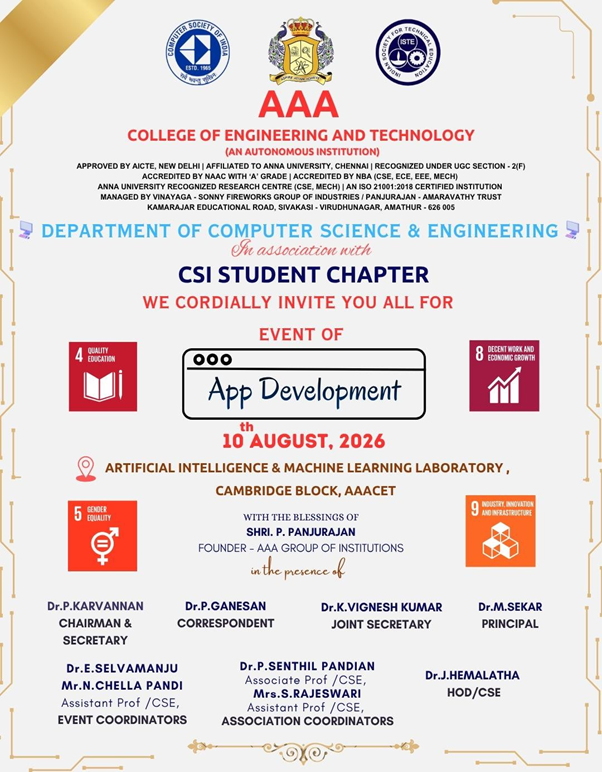
| Association: | CSI Student Chapter |
| Institution: | AAA College of Engineering and Technology, Amathur, Sivakasi |
| Date: | 10.08.2026 |
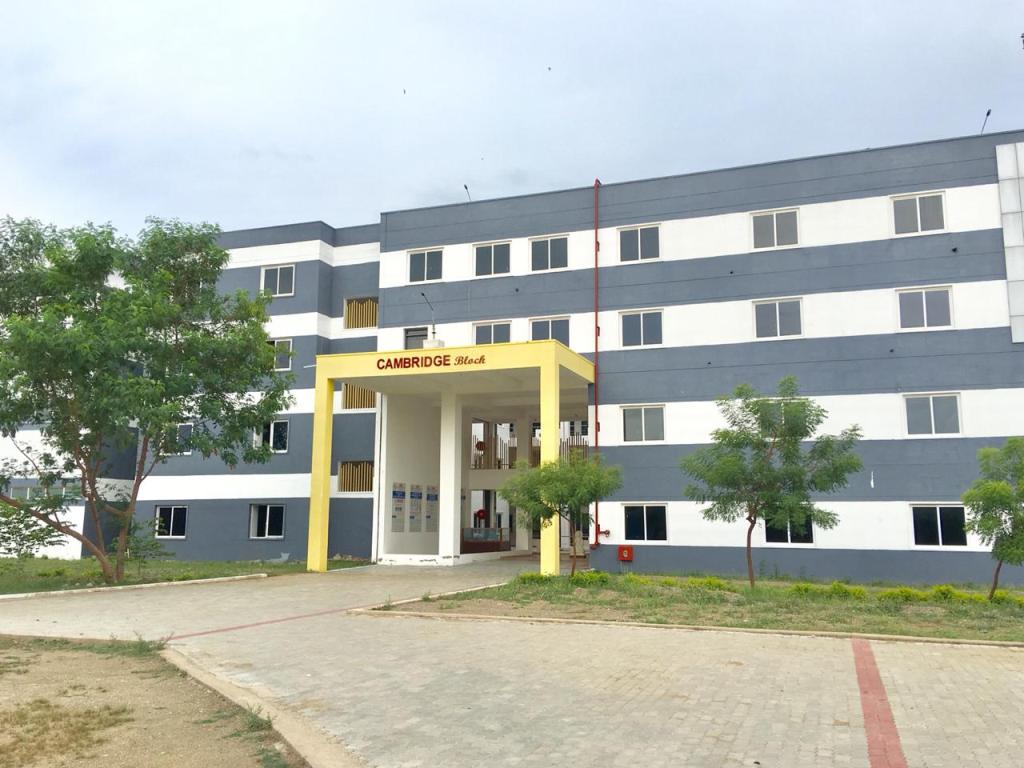
| Venue: | Artificial Intelligence and Machine Learning Laboratory, Cambridge Block, AAACET |
Objective of the Programme
The objective of the App Development programme was to introduce students to the fundamental concepts, processes and techniques involved in software application development. The programme aimed to enhance students’ technical knowledge, encourage creative thinking and innovative problem-solving, and create awareness of application design, development practices and emerging career opportunities in the software industry.
Programme Overview
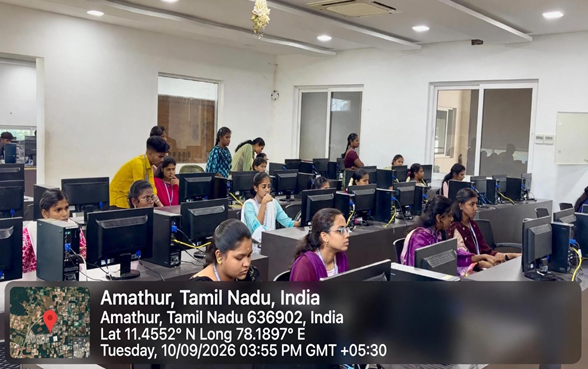
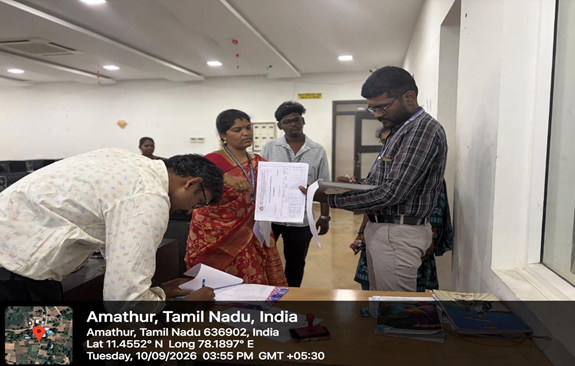
The Department of Computer Science and Engineering, in association with the CSI Student Chapter, organized the App Development programme on 10th August 2026 at the Artificial Intelligence and Machine Learning Laboratory, Cambridge Block, AAA College of Engineering and Technology. The programme was conducted with the blessings of Shri. P. Panjurajan, Founder – AAA Group of Institutions, and the support of the institution’s management.
The programme focused on the fundamental concepts and essential stages of application development. It highlighted the importance of understanding user requirements, designing application interfaces, selecting appropriate development tools and implementing suitable programming approaches. The programme also emphasized the significance of testing, debugging and improving application functionality. It encouraged students to explore innovative ideas and understand how programming knowledge can be applied to develop useful software applications.
Key Areas Covered
- Fundamentals of Application Development
- Application Planning, Design and Development Processes
- User Interface (UI) and User Experience (UX) Considerations
- Programming Concepts, Tools and Development Environments
- Application Implementation, Testing and Debugging
- Practical Applications of Software Development Concepts
- Innovation and Career Opportunities in Application Development
Event Coordinators
- Dr. E. Selvamanju, Assistant Professor / CSE
- Mr. N. Chella Pandi, Assistant Professor / CSE
Association Coordinators
- Mrs. S. Rajeswari, Assistant Professor / CSE
Head of the Department
- Dr. J. Hemalatha, Professor and Head / CSE
Outcomes of the Programme
- Enhanced students’ understanding of the fundamental concepts and processes involved in application development.
- Improved awareness of application design, implementation and testing practices.
- Developed an understanding of the importance of selecting appropriate programming tools and development environments.
- Encouraged creative thinking and innovative approaches to software application development.
- Created awareness of emerging trends and career opportunities in the software development domain.
Program Outcomes (PO) Mapping
The programme contributed to the attainment of the following Programme Outcomes:
- PO1: Engineering Knowledge
- PO2: Problem Analysis
- PO3: Design/Development of Solutions
- PO5: Engineering Tool Usage
- PO8: Individual and Collaborative Team work
- PO9: Communication
- PO11: Life-Long Learning
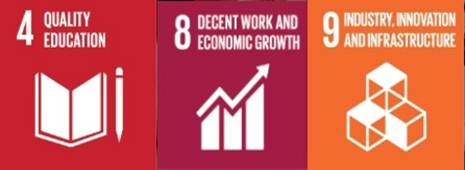
Alignment with Sustainable Development Goals (SDGs)
The programme contributed to the following Sustainable Development Goals:
- SDG 4 – Quality Education: Promoted technical learning and strengthened students’ understanding of application development concepts and practices.
- SDG 8 – Decent Work and Economic Growth: Enhanced awareness of industry-relevant technical skills and career opportunities in the software development sector.
- SDG 9 – Industry, Innovation and Infrastructure: Encouraged technological innovation, creative problem-solving and the development of useful software applications.
Conclusion
The App Development programme provided students with an opportunity to strengthen their understanding of software application development and its practical relevance. It emphasized the importance of programming knowledge, application design, development practices and innovative thinking in addressing real-world requirements. The programme also encouraged students to explore emerging technologies, enhance their technical competencies and prepare themselves for future academic and professional opportunities. Overall, the initiative reflected the Department of Computer Science and Engineering’s commitment to promoting technical knowledge, innovation and experiential learning through the CSI Student Chapter.