
Seminar on Quantum Computing: From Qubits to Real-World Applications
Can computers solve every problem quickly?
Organized by: Department of Artificial Intelligence and Data Science and Department of CSE (Cyber Security)
Institution: AAA College of Engineering and Technology (An Autonomous Institution), Amathur, Sivakasi
Date: 21st October 2026
Venue: Sir C V Raman Hall, AAA College of Engineering and Technology
Duration: 50 minutes, including Q&A
Audience: II Year students of AI&DS and CSE (Cyber Security)
Participants: 181
About the Event
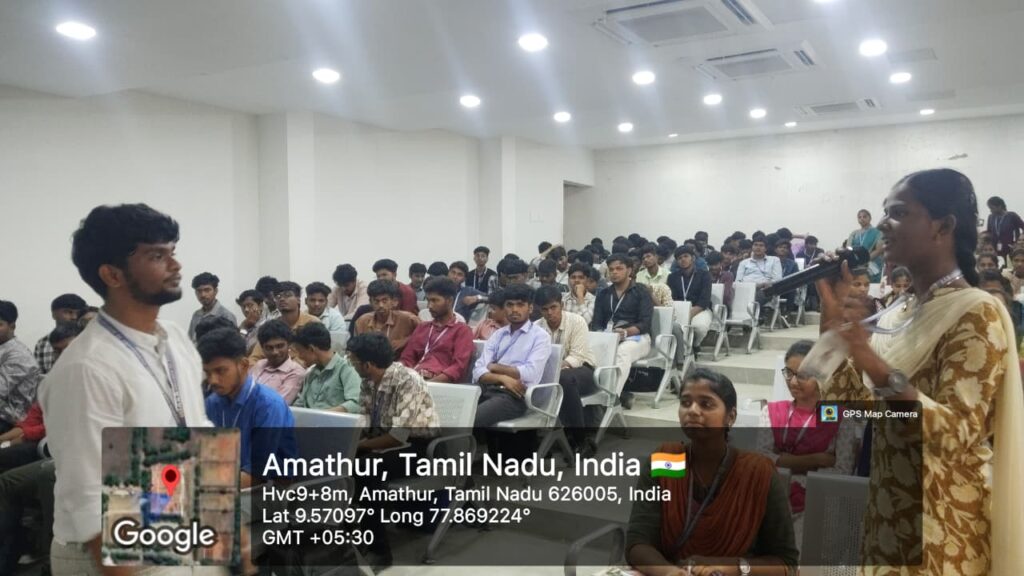
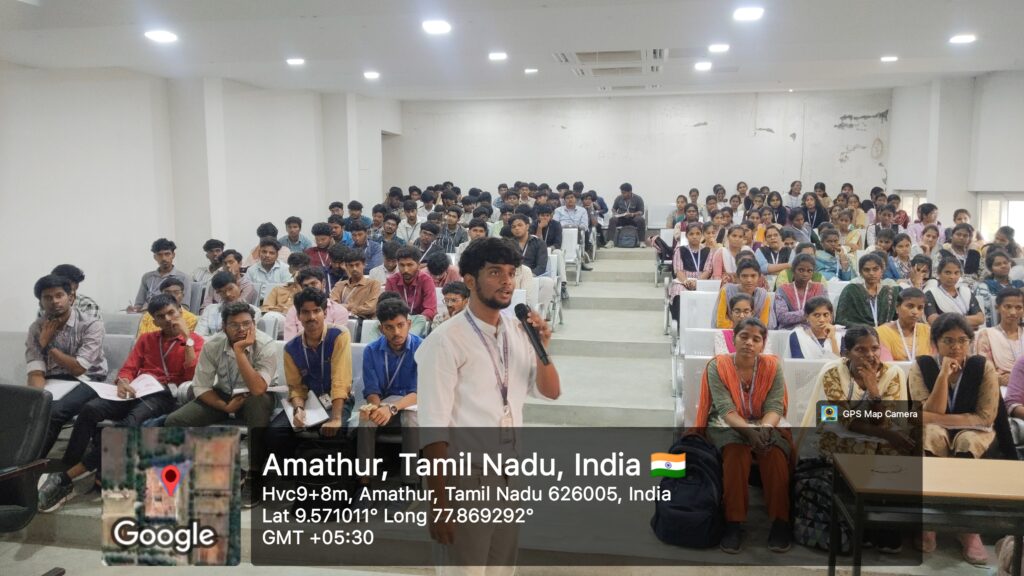
The Department of Artificial Intelligence and Data Science and the Department of CSE (Cyber Security) of AAA College of Engineering and Technology organized a beginner-level seminar titled “Quantum Computing: From Qubits to Real-World Applications” on 21st October 2026 for II Year students of both departments.
Built around the theme “Can computers solve every problem quickly?”, the seminar introduced the next generation of computing and its impact on AI & Data Science and Cyber Security. It began from the very basics and assumed no background in quantum physics. Every concept was linked to the two departments in the audience:
- For AI & Data Science students: quantum ideas were related to probability, optimization and machine learning.
- For Cyber Security students: the talk explained why future quantum computers matter for public-key cryptography and how post-quantum cryptography prepares systems for that future.
Student Speaker
Deepak Raj R, III Year, Department of CSE (Cyber Security), guided the audience step by step from classical bits to qubits, and then to superposition, measurement, entanglement, quantum gates and circuits.
The session was structured in two parts:
Part I: Quantum Computing Fundamentals
- Why quantum computing? Huge calculations, simulation of molecules and materials, and problems with many possible choices; classical computers (bits) compared with quantum computers (qubits)
- The qubit: the basic unit of quantum information, with superposition and measurement probabilities (such as 50%/50% and 80%/20%), and repeated measurement (“shots”) to estimate outcomes
- Entanglement: correlated measurement outcomes of entangled qubits, and why it does not allow faster-than-light communication
- Quantum gates and circuits: the Hadamard gate creating an equal superposition, multi-qubit gates creating entanglement, and measurement at the end of a circuit
Part II: Applications, AI & Data Science and Cyber Security
- Real-world research areas: chemistry, materials science, optimization, scientific research and quantum communication
- AI & Data Science: quantum machine learning and quantum optimization, with fair comparison against classical methods using the same data and metrics
- Cyber Security: why public-key cryptography (RSA, ECC) faces higher future risk, while symmetric encryption (AES) and hashing are less affected
- Shor’s and Grover’s algorithms: Shor’s algorithm (factoring, a threat to RSA and related systems) and Grover’s algorithm (quadratic speedup for unstructured search)
- Post-quantum cryptography: algorithms that resist classical and quantum attacks and run on ordinary computers, including NIST FIPS 203 (ML-KEM), 204 (ML-DSA) and 205 (SLH-DSA)
- Challenges: why quantum computers are hard to build (noise, decoherence, gate errors, measurement errors), the role of error correction, and future opportunities
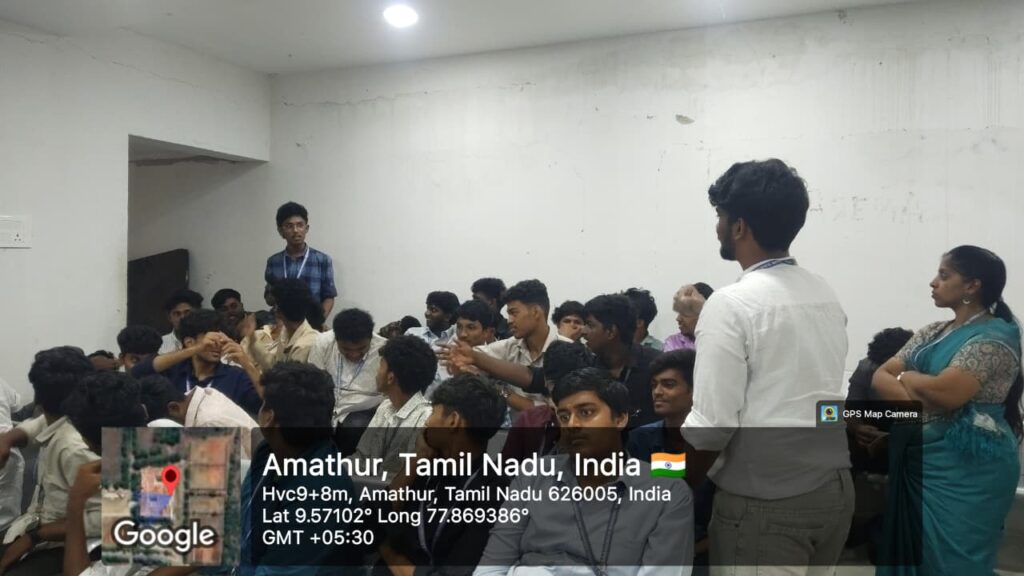
The seminar closed with key takeaways and a question-and-answer round on bit versus qubit, applications and the need for post-quantum cryptography.
Participation
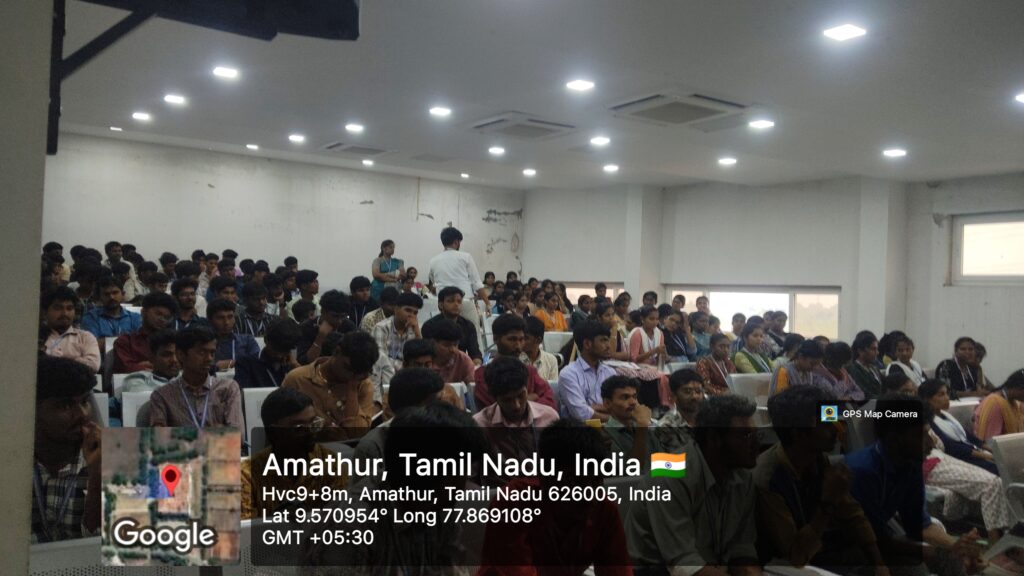
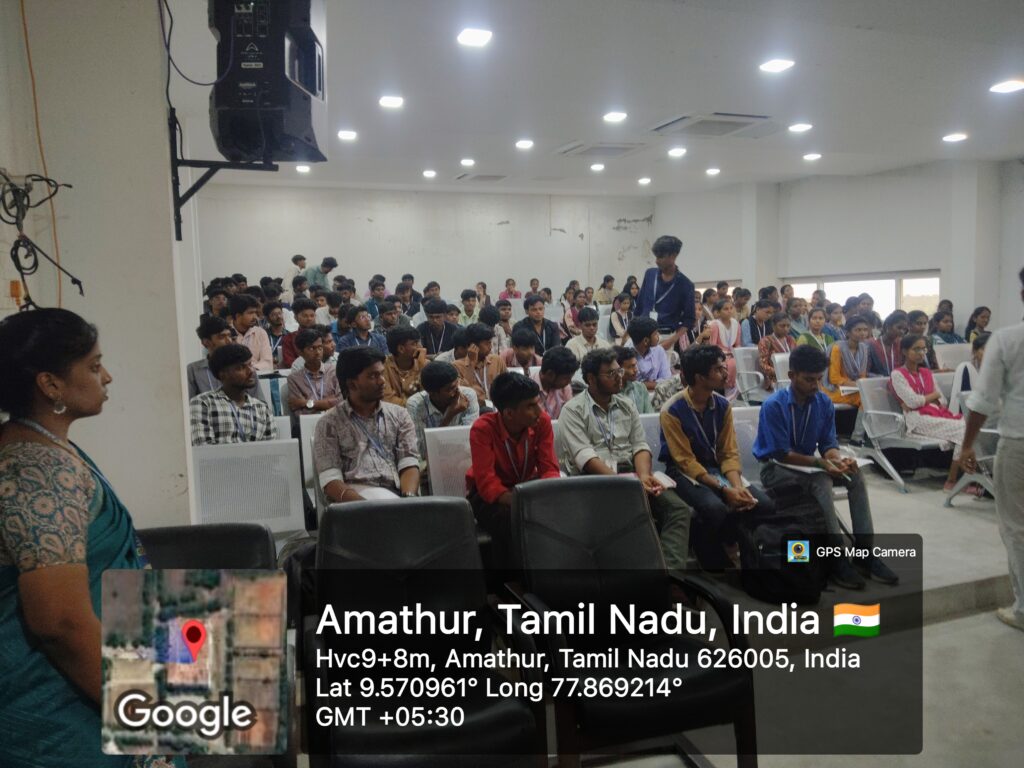
A total of 181 students of AI&DS and CSE (Cyber Security) took part.
Conclusion
The seminar “Quantum Computing: From Qubits to Real-World Applications” was a successful peer-learning event. It gave students a clear, realistic introduction to quantum computing, showed its possible links with AI & Data Science and Cyber Security, and encouraged them to explore the field further. It also reflected the commitment of the Departments of AI&DS and CSE (Cyber Security) to nurturing confident, curious and future-ready engineers.
Event Coordinator: Mrs. R. Madhu Keerthana, AP/Cyber