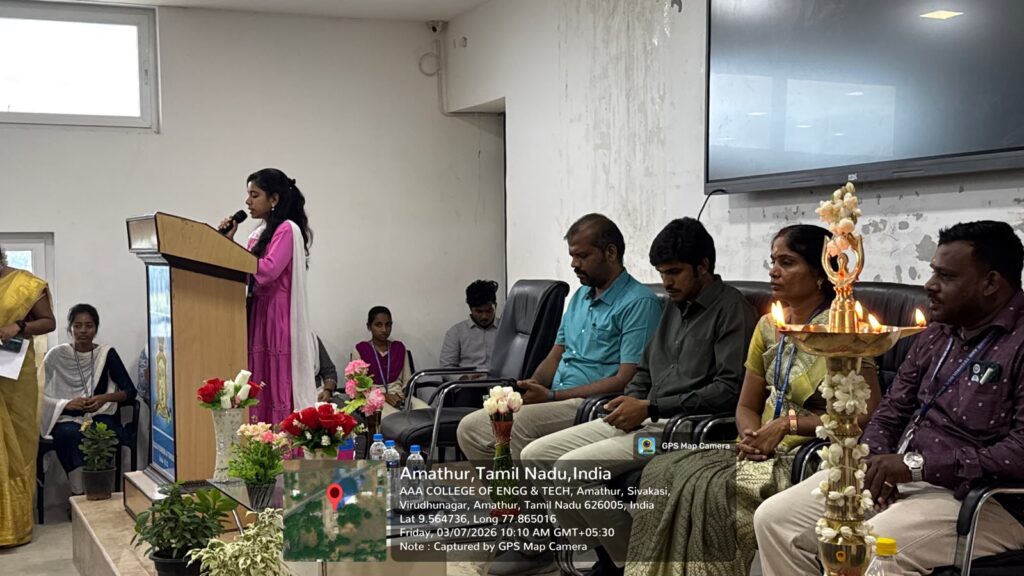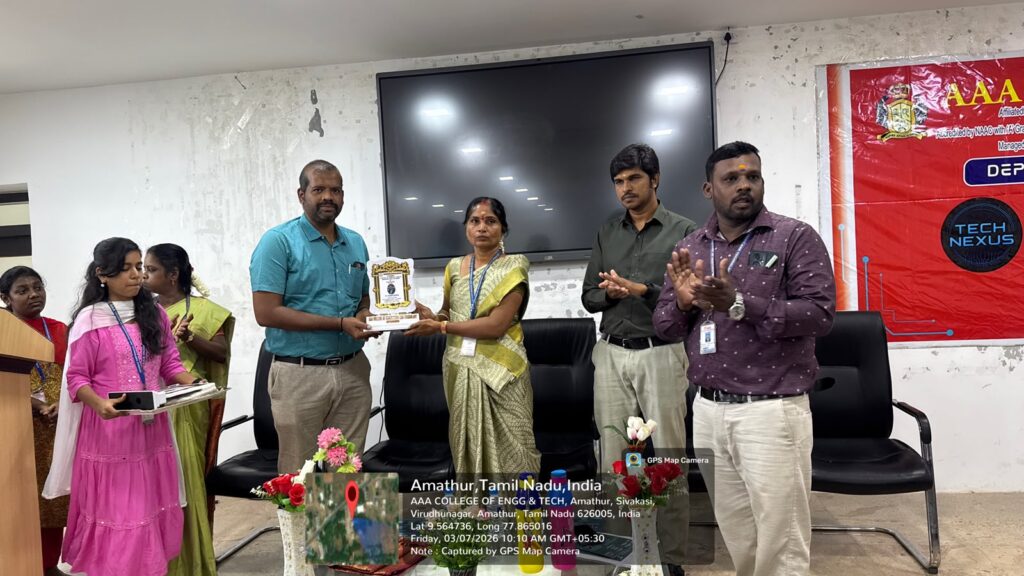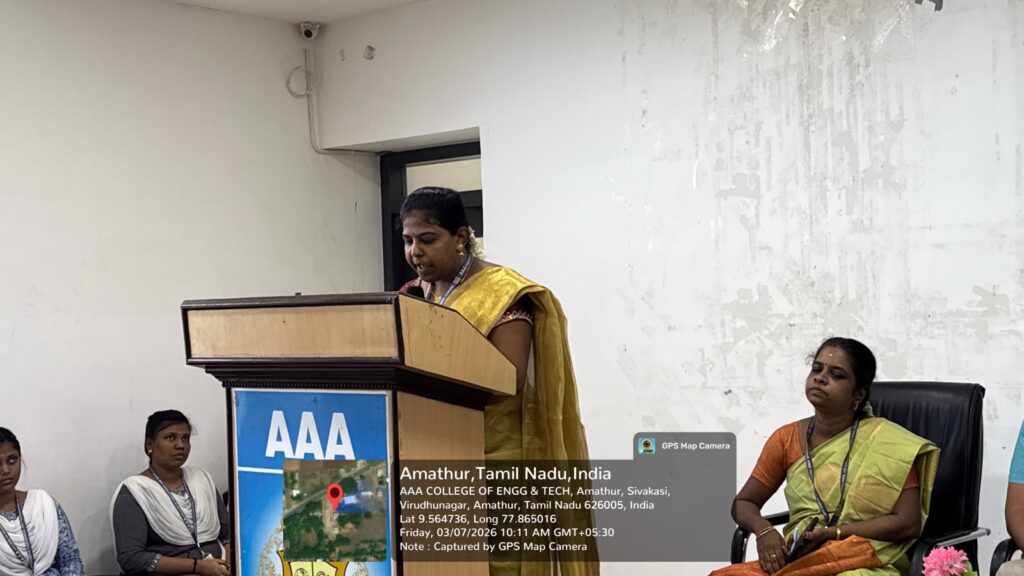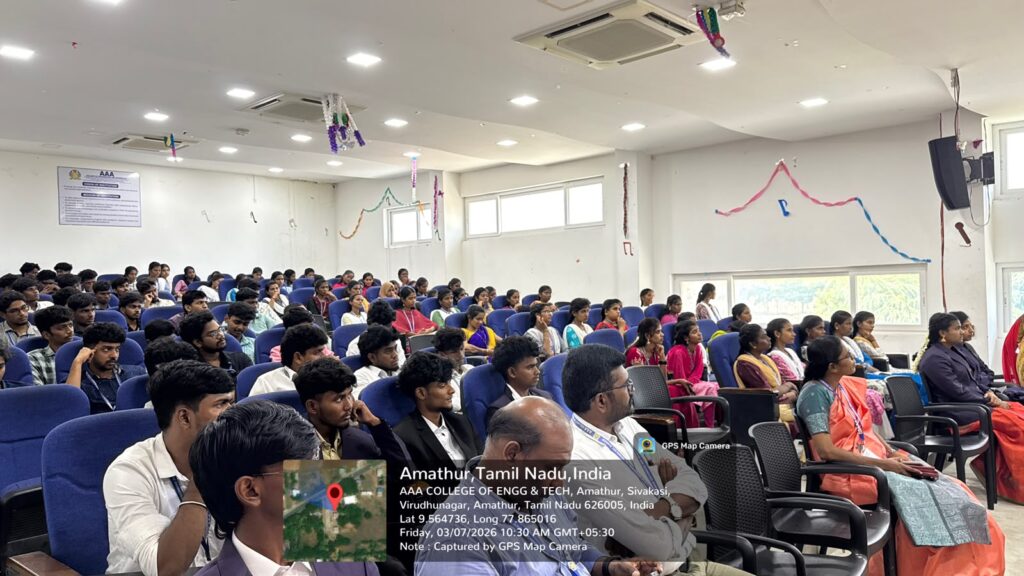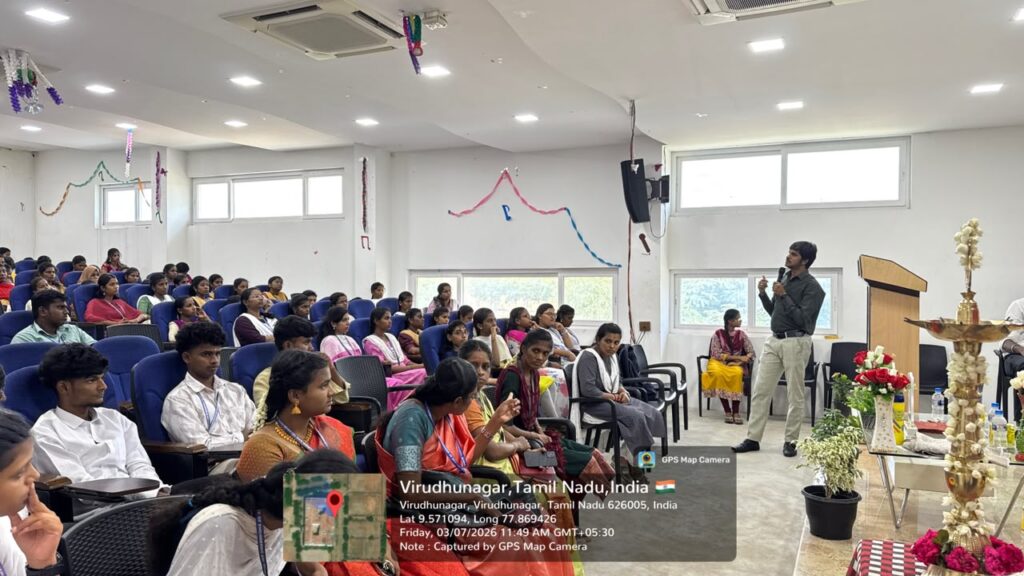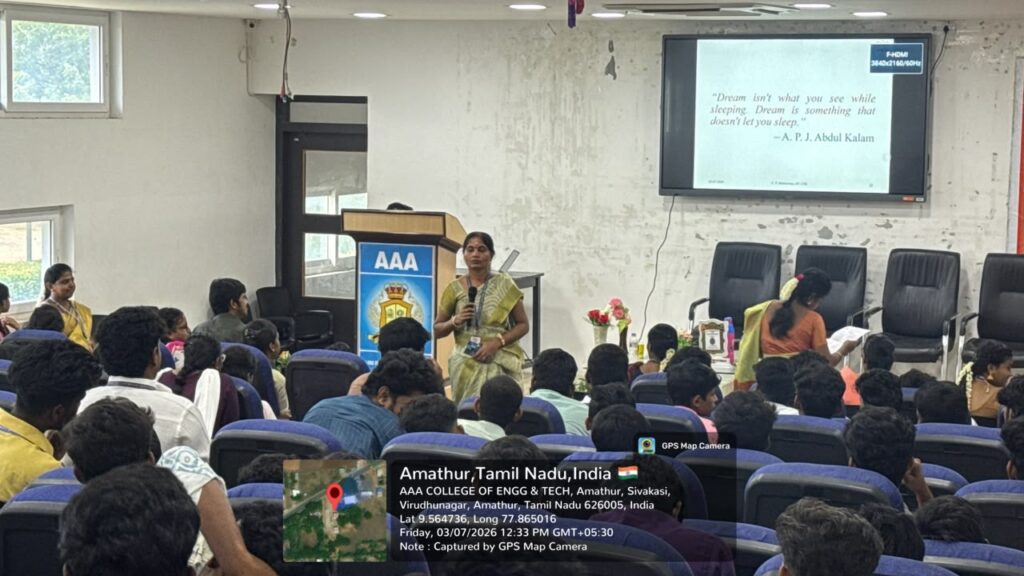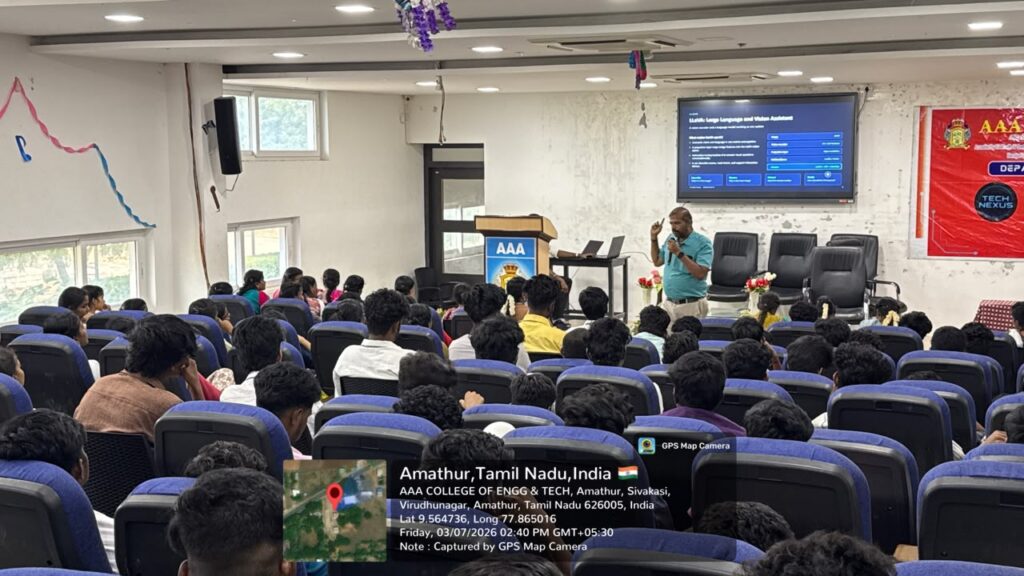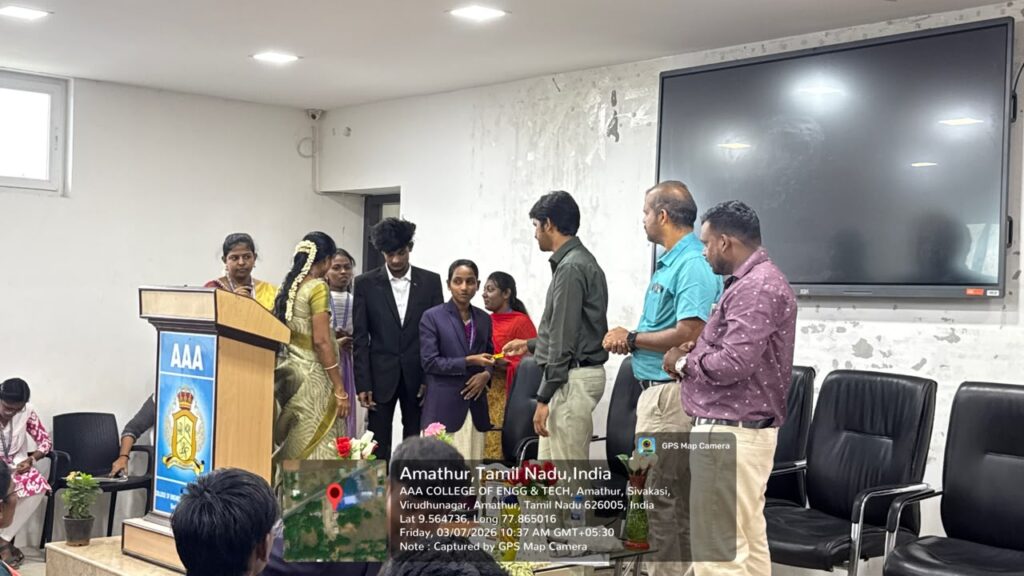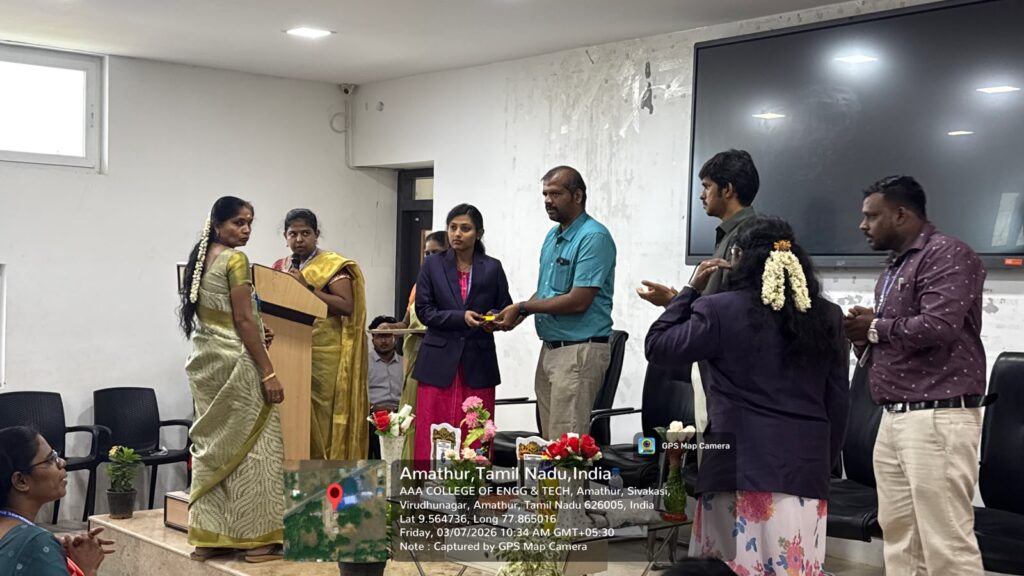
The Department of Information Technology successfully organized its Association Inauguration Function on Friday, 3 July 2026, with the objective of encouraging students to explore the latest developments in the field of Information Technology and to strengthen the connection between academic learning and industry practices. The event marked the beginning of the department’s academic association activities for the year and provided an excellent platform for students to gain knowledge from eminent academicians and industry experts. The inauguration was attended by faculty members, students, and distinguished guests, making it a memorable and intellectually enriching occasion.
The function was graced by two eminent chief guests, Dr. R. Anandha Murugan, Founder of Purvidy, India & Dubai, and Dr. C. P. Sabariram, Assistant Professor, V.O.C. College of Engineering, Thoothukudi. Both speakers shared their expertise and practical experiences, providing students with valuable insights into the rapidly evolving technological landscape. Their addresses emphasized the importance of continuous learning, innovation, research, and skill development to succeed in today’s competitive IT industry.
The seminar focused on the emerging technologies of Artificial Intelligence (AI), Computer Vision, and Enterprise Cloud Platforms, which are transforming industries across the globe. The speakers explained how these technologies have become the foundation of modern industrial automation by enabling organizations to process large volumes of visual and digital data efficiently. Students learned that Artificial Intelligence has evolved beyond automation to become a powerful decision-making tool capable of recognizing patterns, making predictions, and supporting intelligent business operations. They also understood how Computer Vision enables machines to interpret and analyze images and videos in a manner similar to human vision, thereby supporting applications across manufacturing, healthcare, transportation, agriculture, retail, and security.
The resource persons elaborated on the role of Enterprise Cloud Platforms in supporting AI-driven applications. They explained that cloud computing provides highly scalable infrastructure capable of processing enormous volumes of data while offering flexibility, security, and cost efficiency. By integrating AI with cloud platforms, organizations can analyze visual information in real time and transform unstructured data into meaningful business insights. This integration enables enterprises to improve productivity, optimize operations, and make informed decisions based on accurate and timely information.
Students were introduced to several practical applications of AI-powered Computer Vision systems used in industries. One of the major applications discussed was automated data capture, where cloud-hosted Optical Character Recognition (OCR) technology extracts information from invoices, receipts, identity documents, and various business records. This process significantly reduces manual effort, improves data accuracy, and accelerates business workflows.
Another important application was quality assurance in manufacturing industries, where AI-enabled vision systems inspect products on assembly lines and identify microscopic defects that are difficult for the human eye to detect. Such intelligent inspection systems improve product quality, minimize production errors, and reduce operational costs.
The seminar also highlighted workplace safety monitoring as an important application of Computer Vision. Students learned how AI-powered surveillance systems continuously monitor industrial environments to ensure that employees comply with safety regulations by wearing appropriate protective equipment and to identify hazardous situations before accidents occur. These systems contribute to creating safer workplaces while reducing risks and enhancing organizational compliance. In addition, the speakers explained how operational intelligence is achieved by analyzing camera feeds to monitor customer movement, understand consumer behavior, optimize store layouts, and improve asset utilization. Such intelligent analytics help organizations make data-driven decisions that enhance operational efficiency and customer satisfaction.
A significant part of the session focused on the architecture of deploying AI-based Computer Vision systems in enterprises. The speakers explained the differences between centralized cloud AI and hybrid edge AI approaches. In the centralized cloud architecture, computationally intensive tasks such as deep learning model training and retraining are performed using powerful cloud computing resources.
Data collected from multiple business locations is aggregated into centralized repositories, enabling organizations to build highly accurate AI models. Although cloud computing offers excellent scalability and centralized management, transmitting high-definition video streams continuously to cloud servers can increase bandwidth usage and operational costs.
The concept of hybrid edge AI was presented as an efficient solution for addressing latency, privacy, and bandwidth challenges. Students learned that lightweight AI models can be deployed directly on edge devices such as smart cameras, embedded systems, and gateway devices, allowing data to be processed locally with minimal delay.
This enables immediate detection of events and real-time alerts, which are essential in applications such as industrial automation, surveillance, and autonomous systems. Since sensitive data remains within the organization’s local infrastructure, hybrid edge AI also enhances privacy and regulatory compliance. The enterprise cloud continues to function as a centralized management platform by securely distributing software updates and optimized AI models to edge devices, thereby combining the strengths of both cloud and edge computing.
Throughout the seminar, the speakers emphasized the growing demand for professionals with expertise in Artificial Intelligence, Machine Learning, Computer Vision, Cloud Computing, and Data Analytics. They encouraged students to strengthen their programming skills, participate in research activities, undertake industry-oriented projects, and pursue professional certifications to remain competitive in the evolving technology sector. They also highlighted the importance of interdisciplinary learning, ethical AI practices, and continuous innovation in addressing real-world challenges.
The interactive session at the end of the programme provided students with an opportunity to clarify their doubts regarding career opportunities, research directions, industrial applications, and emerging trends in AI and cloud technologies.
The discussions inspired students to explore advanced technologies with greater enthusiasm and confidence. The Association Inauguration Function concluded successfully with positive feedback from participants, leaving students motivated to enhance their technical knowledge, develop practical skills, and prepare themselves for successful careers in the rapidly advancing field of Information Technology.
AP & Head : Mrs.S.Seethalakshmi (IT)
Co-ordinator : Mr.N.Muniselvam (AP/IT)