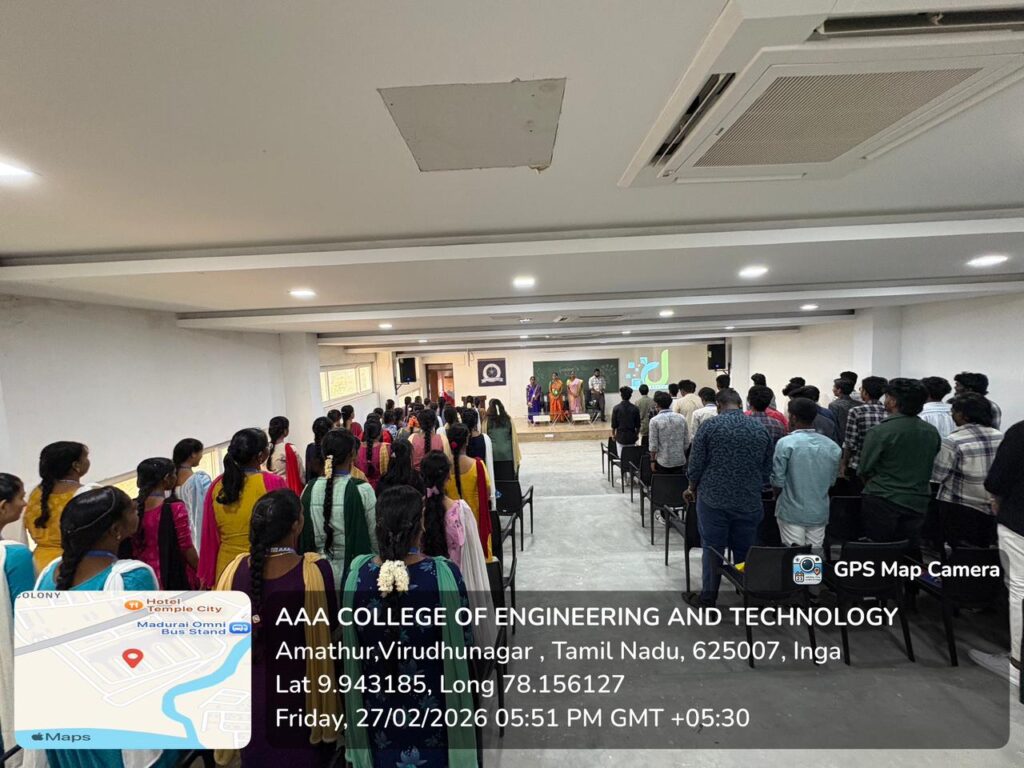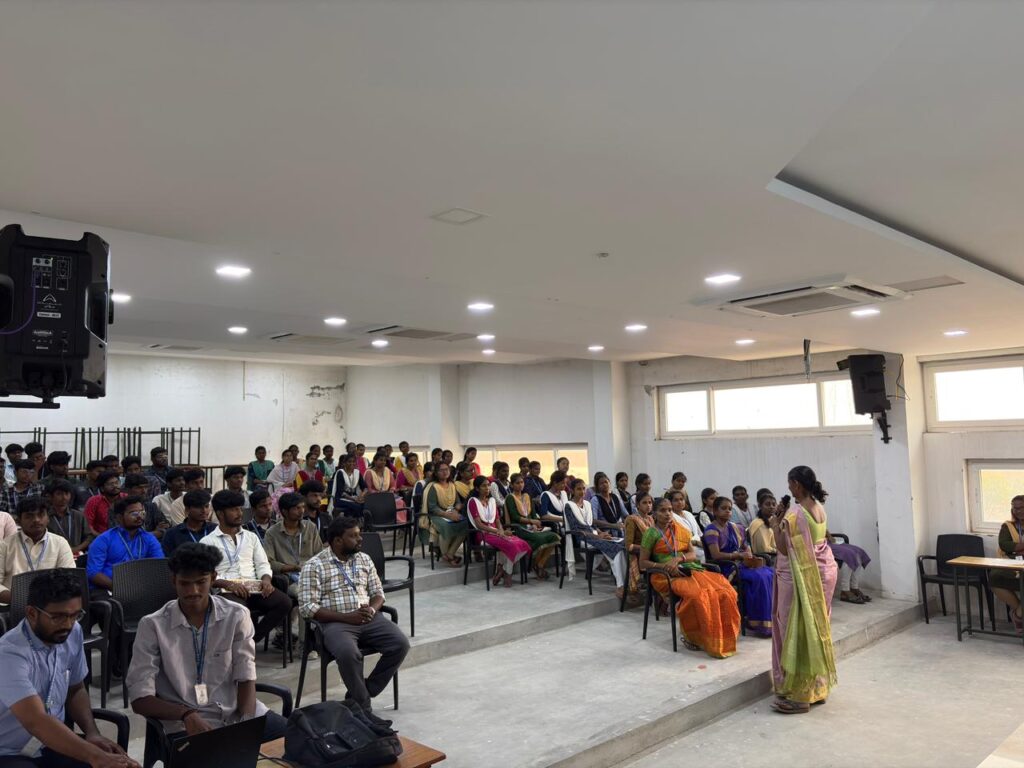
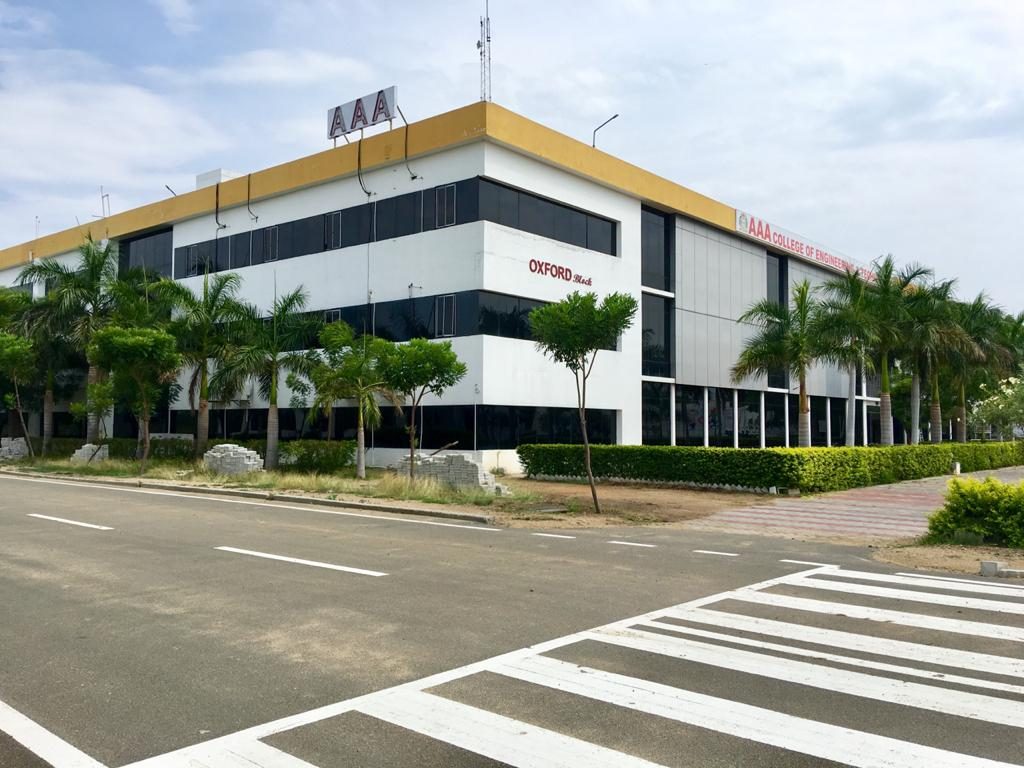



The seminar on How to Build AI Agents was held on February 27th, 2026, at 10:00 AM and was conducted by Dr. S. Thayammal, Ph.D (BS-IITM), Director of Deep Dive Technologies. The session aimed to provide participants with an in-depth understanding of the process involved in creating intelligent AI agents, from initial planning to deployment and ongoing monitoring.
Dr. Thayammal began the seminar by emphasizing the importance of defining the purpose and goal of an AI agent. She explained that the first step in developing any AI system is to clearly understand what problem the agent is intended to solve. This involves identifying specific objectives and outcomes that the AI agent should achieve. For instance, an agent could be designed to automate customer support, provide real-time recommendations, or assist with complex data analysis. She highlighted that without a well-defined purpose, even the most advanced AI model would struggle to provide meaningful results.
Once the purpose is clear, Dr. Thayammal discussed the need to choose an appropriate framework or platform. She explained that frameworks like TensorFlow, PyTorch, and OpenAI APIs provide the foundational tools needed to build, train, and deploy AI agents. The choice of platform depends on several factors, including the type of AI agent, integration requirements, scalability, and available support for pre-trained models. Selecting the right framework ensures that the development process is efficient and that the agent can perform optimally in its intended environment.
The next critical step, according to Dr. Thayammal, is to select the brain of the AI agent, which could be a large language model (LLM) or a domain-specific model. She elaborated that the AI “brain” is responsible for understanding inputs, making decisions, and generating outputs. For general-purpose tasks, LLMs are highly effective due to their ability to understand and generate natural language. For specialized tasks, such as image recognition, predictive analytics, or financial forecasting, domain-specific models can offer higher precision and efficiency. The selection of the right model is crucial to ensure that the AI agent can meet its objectives effectively.
Following the selection of the model, the seminar covered the importance of defining tools and actions. Dr. Thayammal explained that an AI agent relies on a set of tools and actions to interact with its environment and perform its tasks. This may include APIs for accessing external data, automation scripts for executing tasks, or integration with other software systems. Clear definition of actions helps prevent errors and ensures the agent behaves in a controlled and predictable manner while interacting with users or other systems.
Dr. Thayammal then elaborated on developing the workflow and logic of an AI agent. This involves mapping out how the agent processes inputs, makes decisions, and executes actions.
She highlighted the importance of creating structured decision-making processes, which could be implemented through decision trees, reinforcement learning loops, or other algorithmic workflows. Effective workflow design ensures that the agent performs tasks efficiently, responds accurately to different scenarios, and can handle exceptions without failure.
Finally, the seminar addressed deployment and monitoring. Dr. Thayammal explained that once an AI agent is developed, it must be deployed on suitable servers or cloud platforms, where it can operate in real-time or batch modes depending on the application. Continuous monitoring is essential to track performance, detect errors, and gather data for improvement. She stressed that AI agents are not static; their effectiveness can be enhanced over time through iterative updates, performance tuning, and adaptation to changing requirements.
The seminar concluded with a discussion on the dynamic nature of AI development and the importance of ongoing learning and experimentation. Participants gained a thorough understanding of the practical steps involved in building AI agents, from conceptualization and model selection to workflow design, deployment, and continuous improvement. Dr. Thayammal’s insights provided valuable guidance for both beginners and professionals interested in AI agent development, emphasizing that successful AI implementation combines careful planning, technical skill, and continuous adaptation.
Overall, the seminar was highly informative, offering detailed guidance on creating AI agents that are functional, efficient, and capable of solving real-world problems. Participants left with practical knowledge, actionable steps, and a strong foundation for embarking on their own AI projects.